Best water filters for hard water: buyers guide
Updated: Jul 10
Better-tasting water? Easy yes. Knowing which filter to buy? Surprisingly hard.
There are so many water filters out there – everything from basic jugs to fancy taps and full under-sink systems. If it all feels a bit confusing, you’re definitely not alone. Here’s our easy guide to water filters for UK hard water, and how to choose the one that’s right for your home.

Filtered water that tastes nicer and slows down the limescale build-up in your kettle? Yes please!
I used a Brita jug for years but ditched it when we moved and it didn’t fit in our new fridge (classic!). At the plumbing company I also run – we’re getting more and more people asking us to install under-sink filters and filtered taps lately.
So naturally I went down the rabbit hole: what are the main types of drinking water filters, what they do, and how do you choose the right one.
Here's my lowdown.
Who water filters are best for
If you're fed up with poorly tasting tap water and replacing your kettle every year or two, a filter might be just what you need.
Most water filters help improve taste, reduce certain contaminants and change the way the minerals that make limescale behave, but they don’t technically “soften” your water (unless it's reverse osmosis – more on those below). So while your tea might taste better and your kettle could last longer, filters won’t fix limescale in your pipes, boiler or shower.
A water filter is worth considering if you:
Mainly want better tasting drinking water
Want to reduce limescale in your kettle and coffee machine
Don’t want a full-house softener
If that’s you — keep reading.
What a water filter actually does
Generally water filters use a simple two-step process:
Carbon granules – basically a super-porous sponge. Usually made from coconut shells, the carbon grabs onto chlorine and other bits that make water taste or smell odd.
A fine membrane – think of it like a tiny sieve. This catches things like rust flakes, sediment, microplastics and general murkiness from old pipes.
Do they completely remove limescale?
Not completely (unless it's reverse osmosis). But they often change the way the calcium and magnesium behave so that limescale builds up more slowly inside your kettle.
So while your pipes and shower won’t magically change, your cuppa might.
The main types of water filters
Filter jugs
Filter jugs are the “starter pack” of water filtering. You fill them from the tap, wait a minute or two, and pour. No installation, no fuss, and they genuinely improve taste.
They’re ideal if you want filtered water on a budget or you’re not ready to commit to a plumbing upgrade. The catches are they'll probably only reduce limescale a little, you usually need to change filters monthly and how heavy they are when full.

Best for: A low-cost, low-commitment upgrade
Price: £15 – £40
Limescale reduction: Low to moderate — may help slow down build-up in kettles slightly, look for models designed for hard water
Pros:
No installation
Easy to use
Chill nicely in the fridge
Widely available
Cons:
Heavy when full
Need lots of refilling
Slower flow
Frequent filter changes (usually monthly)
Our favourite pick jug: Brita Maxtra Pro Limescale Expert specifically designed for hard water
On-tap filters
These small devices attach directly to your existing tap, giving you filtered water instantly. They're a great step up from a filter jug, because you can enjoy filtered water on demand without constantly refilling and lifting a heavy jug.
They do make your tap look a bit bulkier, so they're not the sleekest option. But if you value convenience over appearance, they're a simple, no-plumbing way to get filtered water whenever you need it.

Best for: Quick, no install, filtered water straight from the tap
Price: £25 – £80
Limescale reduction: Low to moderate — similar results to jugs but more convenient, look for models designed for slowing limescale
Pros:
DIY installation
Switch between filtered/unfiltered
Lower price
Cons:
Not the sleekest option
Won’t fit every tap
Filter changes every 3/4 months
Our favourite pick on-tap filter: FlowPure one of the few on-tap filters that claims to be effective on limescale
Inline under-sink filters
These are the simple cartridge-style systems that sit under your sink and are connected to your cold water line. They improve taste, reduce chlorine and sediment, and usually only need changing once a year.
These are our best all-rounder because they're a great balance of price, performance and ease.
Most will help reduce limescale by changing how minerals behave, while some go further with a dedicated anti-scale filtration stage like Maverick which claims up to 99% limescale reduction.
Think of them as the “minimal effort, great improvement” option.

Best for: Everyday filtration, balancing price, performance and ease.
Price: £70 – £130
Limescale reduction: Moderate to high — helps keep kettles and cleaner for longer (depending on spec)
Pros:
Medium cost
Easy installation
Keep healthy minerals in
Once-a-year filter change
Cons:
You might need a plumber if you don’t have flexihoses
Flow may slow when the filter is nearly done
Our favourite pick inline filter: Maverick Mav 02 has a dedicated anti-scale stage that customers report works well
3-in-1 filtered taps
A 3-in-1 looks like a normal, modern kitchen tap - but gives you hot, cold and filtered cold water all in one. Under the sink sits the filter cartridge, dealing with taste issues, chlorine and scale-forming minerals. If you want a neat, long-term solution (and you’d prefer a premium look), this could be a good option.

Best for: A permanent, stylish filtered tap
Price: £150 – £350+
Limescale reduction: Moderate — may noticeably reduce kettle scaling depending on cartridge spec
Pros:
Clean, modern design
Three water options in one tap
Great taste improvement
Cons:
May need a plumber to install
Higher upfront cost
Cartridge changes every 6–12 months
Our favourite pick 3-in-1 tap: Brita mypure P1 this filter tap specifically reduces carbonate hardness and limescale
Reverse osmosis systems
If you’ve had enough of limescale in your kettle and coffee machine and want it gone for good, a reverse osmosis (RO) system is your best option.
They take filtration to a whole new level, removing almost everything from the water — including the minerals that cause limescale. If you’re also concerned about things like fluoride, nitrates or microplastics, this is the most powerful option available.
Under sink RO systems
They usually come with multiple cartridges and, in traditional setups, a small storage tank — so they take up more space under the sink and can cost more to run. However newer 'tankless' designs are now available, which are more compact, faster, and take up significantly less space.
Most systems also include a separate, dedicated drinking water tap, installed alongside your main kitchen tap for filtered water on demand.

Best for: Ultra-pure drinking water
Price: £200 – £800+
Limescale reduction: High — removes limescale-forming minerals
Pros:
Premium filtration
Removes a huge range of contaminants
Taste improvement is noticeable
No more limescale
Cons:
More expensive
Plumber may need to install
Creates wastewater
Removes all the good minerals
Our favourite pick under-sink RO: Waterdrop G3P600 gives you exceptionally clean drinking water and no more limescale
Learn more about reverse osmosis for hard water and the best reverse osmosis systems for UK homes.
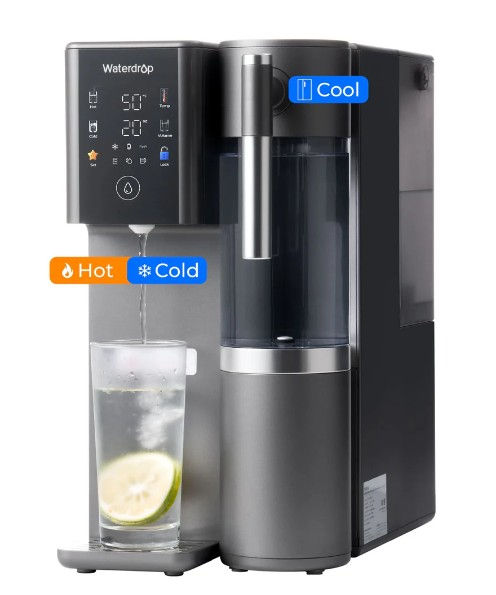
Countertop (worktop) reverse osmosis systems
These are one of the fastest-growing options right now — especially for anyone who doesn’t want the hassle of professional installation.
They sit on your worktop, plug in, and filter water without connecting to your plumbing (you fill it up manually).
Best for: No-install, high-performance filtration
Price: £250 – £600
Limescale reduction: High — removes limescale-forming minerals
Pros:
No plumbing required
Very high filtration
Portable
No more limescale
Instant hot water (some models)
Cons:
Takes up worktop space
Needs refilling manually
Removes all the good minerals
Our favourite pick countertop RO: Waterdrop A2 filtered hot and cold water on demand, no more limescale (and no more kettle!)
Popular picks (based on what we actually install)
At Plumberly, the plumbing company I co-run, these are the top three filters we’re installing again and again in hard water homes across Dorset. They’re popular for different reasons, but they all offer solid performance.
1. Maverick Mav 02 under-sink filter
A budget-friendly, fuss-free inline cartridge filter that sits neatly on your cold feed under the kitchen sink. It improves taste, reduces chlorine, and has a dedicated anti-scale stage for limescale reduction.

What our customers like about Maverick:
It reduces limescale and customers de-scale less frequently.
You don’t need to change your tap — it works with the tap you already have.
The cartridges last around a year, so maintenance is minimal.
The taste improvement is noticeable.
It’s compact, discreet and easy to DIY if you have flexi-hoses.
If you have rigid pipework a plumber can install for around £100.
Who it’s best for: Households that want less limescale from their tap water and minimal maintenance.
2. BRITA Mypure 3-in-1 tap
A premium filtered tap that replaces your existing kitchen mixer and gives you hot, cold and filtered cold water from a single sleek unit. It’s stylish, modern and a good choice if you're looking to get a new kitchen tap anyway.

What stands out about it:
You get filtered water on demand with no flow-rate compromises.
It's specifically designed to help reduce water hardness, limescale and contaminants.
The BRITA brand gives people confidence, especially if they’ve used BRITA jugs.
Who it’s best for: Homes prioritising both design and performance, or anyone who wants filtered water without an extra tap cluttering the sink area.
3. Waterdrop G2P600 Reverse Osmosis System
If you want the cleanest-tasting drinking water possible and no more limescale, this is the system our plumbers rate the highest for up-to-date technology and ease of use. It’s slim, quiet and far more user-friendly than the bulky RO units of years gone by. It also comes with its own dedicated RO tap, so you get ultra-clean water without changing your main kitchen mixer.

What stands out about it:
It means no more limescale in your kettle or coffee machine.
No bulky storage tank, so it actually fits in modern under-sink cupboards.
Faster flow than older RO units - no more waiting ages for a glass to fill.
Smart alerts tell you when filters need changing and replacing them is easy.
It produces much less waste water compared to traditional designs.
Who its best for: Homes wanting the highest level of filtration and no limescale, and those who are concerned about fluoride — RO systems remove the majority of it.
Considering Waterdrop? Our Waterdrop filter reviews break down real customer feedback — including how the brand performs when it matters.
Quick comparison: Which filter is right for you?
Filter type | Limescale reduction | Taste improvement | Installation | Best for |
Low – moderate | Good | None | Easy, low-cost start | |
Low – moderate | Good | DIY | Convenience without refilling | |
Moderate – high | Very good | DIY / plumber | Low-maintenance upgrade | |
Moderate | Very good | Plumber | Style + long-term solution | |
High | Excellent | Under sink – plumber Countertop – none | Maximum filtration |
Are water filters worth it in hard water areas?
If your main frustration is the taste of your tap water and the limescale layer in your kettle, then yes, totally. A filter won’t soften your whole house, but it’ll make day-to-day life noticeably nicer.
Keen to filter your shower water too?
If hard water is leaving your skin feeling dry or your hair difficult to manage, it may be worth looking beyond your drinking water. A shower filter won't soften water in the same way a water softener does, but many people find it improves their showering experience.
We've compared the leading options in our guide to the best shower filters for hard water. If you want to learn more about the best products out there, you can also read our Hello Klean shower head review and find out what customers say about Curo Skin based on analysis of 100 real reviews.

Author bio: Lucinda Smalley is the founder of Hard Water Home, a UK-based consumer site helping households in hard water areas understand the challenges and solutions more easily — and make smarter choices for their health and homes. Based in Poole, she also co-runs an award-winning plumbing company, giving her first-hand insight into how water quality affects everything from appliances to skin and hair. When she’s not writing, she’s happiest at the beach with her family and a good cup of coffee (minus the floaty bits!). More about us ➡


