Best on-tap water filter UK: BRITA vs Waterdrop vs FlowPure
Updated: 2 hours ago
If you’re looking for the best tap water filter in the UK, we’ve compared three popular on-tap options — FlowPure, Waterdrop and BRITA — to help you work out which is actually worth buying.

Please note: This page may contain affiliate links, which may earn me a commission at no extra cost to you and as an Amazon Associate I earn from qualifying purchases. Recommendations are always based on independent research and analysis.
A tap water filter attachment is a simple upgrade from a filter jug — no more lifting a heavy jug to the sink, waiting for it to filter or constantly refilling it. You get filtered water straight from the tap whenever you need it.
Rather than judging them on marketing claims alone, we looked at filtration performance, filter lifespan, running costs, build quality, tap compatibility and real customer feedback.
Our best overall tap water filter is the FlowPure Pro Tap Filter, while Waterdrop stands out for value and BRITA offers a simpler option from a familiar brand.
Quick verdict
Looking for another type of water filter? Check out our guide to the Best water filters for hard water
For all the hard water homes out there, it's worth mentioning from the get-go that none of these tap water filters soften hard water. They don't remove the calcium and magnesium minerals responsible for hardness, so they aren't an alternative to a water softener.
FlowPure is the exception in one respect: the manufacturer claims it can help reduce limescale build-up, which we look at in more detail below.
*All prices and specifications correct at time of publishing
FlowPure – best overall tap water filter
FlowPure positions itself as a more advanced tap filtration system, using a multi-stage design that includes activated carbon, activated alumina and a ceramic filtration layer.
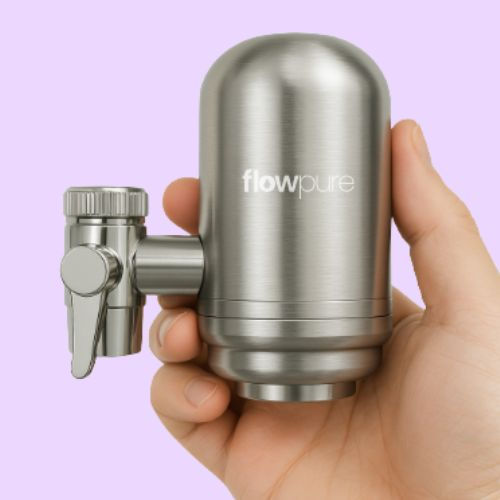
The ceramic stage is claimed to filter down to 0.1 microns, which is significantly finer than the BRITA system.
The company states the filter can reduce 150+ substances, including: lead, chlorine, microplastics and nanoplastics, PFAS and other “forever chemicals”, THMs (trihalomethanes), bacteria and viruses, arsenic, selenium and pesticides.
It’s also the only filter of the three that claims to reduce excess fluoride and help slow limescale build-up.
That's one of the reasons it takes our top spot. Waterdrop is cheaper to run and BRITA is the more familiar name, but neither offers the same breadth of stated contaminant reduction.
While it won't completely stop limescale building up in your kettle, it is designed to change how minerals behave in the water, making them less likely to settle as hard scale. That means limescale should build up more slowly, so you can go longer between descaling.
The system uses stainless steel housing, and buyers can either make a one-off purchase or subscribe for replacement filters. Because tap filters gradually collect contaminants over time, regular cartridge replacement is important, so some households may find a subscription helps them keep on top of filter changes.
What customers say
Customer feedback is another reason we've ranked FlowPure first.
The filter currently has a 4.8-star rating on the brand’s website, with customers frequently mentioning improved taste and straightforward installation. That positive picture is echoed on Trustpilot too, where FlowPure currently has a 4.4-star rating.
To get a better picture of how FlowPure performs in real homes, we analysed 100 FlowPure customer reviews for recurring positives and negatives. The feedback was strongly positive, with 92% of customers rating it 4 or 5 stars.
Cost
FlowPure’s ongoing filter costs are higher than some of the cheaper on-tap options, which reflects its finer filtration.
If you choose the Smart Refill Plan:
Every 4 months: £39.99 per delivery, 3 times a year (£119.97 annually)
Every 6 months: £44.99 per delivery, 2 times a year (£89.98 annually)
Each delivery contains two replacement filters. With the 4-month option, that works out at changing the filter every 2 months, which FlowPure recommends for families of 3+ and homes in hard water areas. With the 6-month option, you’ll change it every 3 months, which is better suited to smaller households and softer water.
FlowPure also gives you 100 days to try it risk-free, so if you don’t love it or don’t feel it’s worth the cost, you can return it for a refund.
If you’d rather avoid a subscription, a one-off purchase is £54.99. You can use code HARDWATERHOMEUK for 10% off.
Best if you want:
A high-spec filter with maximum filtration
A tap filter with consistently strong customer feedback
Help with fluoride and limescale
Automatic replacement filters so you don’t have to remember to reorder
The reassurance of 100 days to try it and return it if it’s not for you
Not ideal for
Budget-conscious buyers
Waterdrop – best value tap water filter
Waterdrop is our best-value option, particularly if you want a stainless steel tap filter without FlowPure's higher ongoing cost.
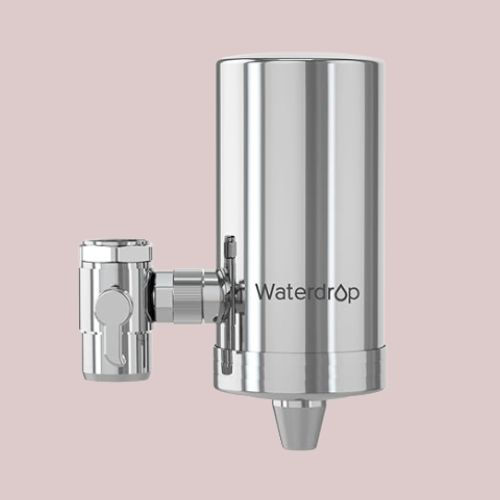
The WD-FC-06 uses food-grade 304 stainless steel housing and a carbon-block filtration system combined with mesh and PP cotton layers. It's primarily designed to reduce chlorine and improve the taste and smell of tap water while filtering certain particles.
Its big advantage is filter capacity. Waterdrop states that each cartridge can treat up to 1,200 litres, compared with 600 litres for the BRITA On Tap V.
At the current replacement-filter price, it also has the lowest annual running cost of the three, making it a good choice if you're more interested in taste, convenience and value than the more extensive filtration claims offered by FlowPure.
What the reviews tell us
The Waterdrop filter currently holds around a 4.3-star rating on Amazon. After reviewing recent feedback, the majority of users reported positive experiences, particularly mentioning:
Easy installation
Improved taste
Strong water flow
The small number of negative reviews typically mentioned installation issues if the seal wasn’t fitted correctly, occasional leaks, or difficulty fitting certain taps.
Overall, the feedback suggests most users find the filter simple to install and effective at improving drinking water taste.
Cost
Waterdrop has the lowest ongoing filter cost of the three options we've compared.
First year: £72.99
Ongoing annual: £49.32 (for recommended 4 filters per year)
Best for
Homes wanting low ongoing costs
Households with higher water use
People who prefer stainless steel instead of plastic
Not ideal for
Buyers wanting very fine filtration
Those concerned with fluoride / limescale
BRITA On Tap V – best basic tap water filter
BRITA On Tap V is the one we'd consider if you want a simple filter from a familiar water-filtration brand rather than the widest contaminant reduction.

Its four-stage filtration system is designed primarily to improve drinking-water quality and taste, reducing chlorine, particles larger than 0.6 microns and certain metals including lead and copper.
Unlike FlowPure and Waterdrop, the housing is plastic. BRITA also states that the system does not reduce water hardness or limescale, so it isn't our first choice for households where scale is an important consideration.
The biggest thing to check before ordering is tap compatibility. A noticeable theme in lower-rated customer reviews is difficulty fitting the unit to certain UK taps, depending on the tap and aerator thread.
What the reviews tell us
The product currently holds an average rating of around 4.2 stars on Amazon. When we looked through recent reviews, the majority were positive, with many users mentioning improved taste and simple installation.
However, a notable number of lower-rated reviews mentioned compatibility issues with UK taps. In practice, this means some households may find the filter doesn’t fit their tap properly, depending on the aerator thread.
If you do decide to try it, buying through Amazon or another retailer with a straightforward return policy is a good idea.
Cost
The Brita filter option comes in middle of the pack.
First year: £75.50
Ongoing annual: £58.50 (for recommended 3 filters per year)
Best for
Households who prefer a familiar brand
Buyers looking for a simple tap filter and taste improvement
Homes that use less water
Not ideal for
People wanting strong filtration performance
Homes with unusual or non-standard taps
Buyers looking to avoid plastic
Those concerned with fluoride / limescale
Which on-tap water filter should you choose?
For us, FlowPure is the best on-tap water filter of the three. Its stainless steel build, 0.1-micron stated filtration and much broader range of contaminant-reduction claims make it the strongest option if you're buying a filter primarily for water quality.
It's also our pick for a hard-water home because, although it doesn't soften the water, it's the only one of the three specifically designed to help reduce limescale build-up.
Choose Waterdrop instead if price is more important. Its stainless steel housing, 1,200-litre stated filter capacity and low replacement-filter costs make it a very good-value everyday filter.
BRITA On Tap V still has appeal if you want a familiar brand and relatively simple taste filtration, but its plastic construction, lower capacity and reported compatibility problems mean we'd choose FlowPure or Waterdrop first.
Alternatives to on-tap water filters
Under-sink filters
If you want something more effective against limescale, under sink water filters sit neatly in your cupboard and need less frequent filter changes. They’re low maintenance and a good balance of price, ease, and performance. Our best balance between price and performance is the Maverick Mav 02.
Read more Best under sink water filters UK
Water softeners
If hard water is the main issue, this is the real solution. A water softener treats the whole house, helping reduce limescale in showers, appliances, and pipework — not just at the tap.
Reverse osmosis (RO)
For the highest level of filtration and removal of the minerals that cause limescale, RO systems remove far more from your water than standard filters. Best suited if your focus is ultra-clean drinking water, but they’re more expensive and involved to install.
When it comes to reverse osmosis, Waterdrop filters are a well-known option — particularly for compact plumbed in under-sink systems and countertop devices (no plumbing needed) that aim to remove a wide range of impurities.
Read more about reverse osmosis systems for hard water
Do tap water filters work for hard water and limescale?
No. Standard on-tap water filters do not soften hard water, so they don't remove the calcium and magnesium minerals responsible for limescale.
Their main job is drinking-water filtration — for example reducing chlorine, certain metals, particles and other contaminants, depending on the filter.
That means even after fitting a tap filter, you may still see limescale forming in your kettle.
Of the three filters we've compared, FlowPure is the only one that specifically claims to help reduce limescale build-up. That may make it the better choice for a hard-water household, but it still isn't the same thing as removing hardness minerals from the water.
If you want to tackle limescale at the source, you'll need a different type of treatment.
What actually removes limescale from tap water?
If you want to stop limescale at the source, there are two main options:
Water softeners
These systems remove calcium and magnesium from the water supply using ion exchange. This is the most effective way to eliminate limescale in the home.
Reverse osmosis systems
These filters remove a wide range of dissolved minerals, including those responsible for hardness, although they’re usually installed under the sink rather than on the tap.
Keen to filter your shower water too?
Many people start by tackling hard water in the kitchen, then realise it's also affecting their skin and hair. If that's the case, a shower filter could be your next upgrade.
Our guide to the best shower filter for hard water UK compares the most popular options side by side. We've also looked in depth at real Curo Skin customer reviews and asked is Hello Klean worth it? by analysing feedback from 100 buyers.
All product specifications, pricing and review ratings correct at 4 March 2026.

Author bio: Lucinda Smalley is the founder of Hard Water Home, a UK-based consumer site helping households in hard water areas understand the challenges and solutions more easily — and make smarter choices for their health and homes. Based in Poole, she also co-runs an award-winning plumbing company, giving her first-hand insight into how water quality affects everything from appliances to skin and hair. When she’s not writing, she’s happiest at the beach with her family and a good cup of coffee (minus the floaty bits!). More about us ➡


