How to tell if hard water is damaging your hair (and what to do about it)
Updated: Sep 17
Ever wondered why your hair feels dry, dull, frizzy, or just plain unmanageable — no matter what shampoo you try? It might not be your hair (or your products). It could be your water.

In this article:
First up - what is hard water?
If you live in a hard water area — like much of the South and East of England — those chalky minerals coming out of your taps could be quietly ruining your hair.
I’ve been there myself. With naturally wavy hair and a fair bit of bleach, I could never get my hair to feel silky smooth after a shower. It was more scarecrow than shampoo ad — dry, crunchy, and hard to manage. I tried fancy shampoos, leave-in conditioners, serums, silk pillowcases... nothing really worked.
Living in Poole, I’m firmly in hard water territory. So I started digging into the science — and the salon advice — behind how mineral-rich water affects our hair. If your locks are misbehaving and you can’t figure out why, here’s what you need to know.
First up — what is hard water?
Hard water just means water with a high level of minerals, mainly calcium and magnesium. It’s common in places like Dorset, Hampshire, Kent, Surrey, London, and most of the South East.
When you wash your hair with hard water, those minerals don’t rinse away. They stick to your hair, build up over time, and can react with your shampoo and conditioner — leaving a film behind that blocks moisture and dulls your colour.
Signs hard water is affecting your hair
Your hair might be trying to tell you something. Look out for these common signs:
Dryness or dullness: Even after conditioning, hair feels rough or lacks shine.
Frizz or rough texture: Your hair won’t smooth out, no matter what styling products you use.
Itchy or flaky scalp: Buildup can throw off your scalp’s natural balance.
Product not rinsing out properly: Shampoo or conditioner feels like it lingers.
Colour fades fast: Dyed hair might lose vibrancy much quicker.
Flat, heavy roots: Hair feels greasy or weighed down soon after washing.
Your hair feels better on holiday: If your hair’s smoother and shinier up north or abroad, softer water could be why.
BME Salon in Bristol says: “The main problem with hard water is that it cannot bind to shampoos, conditioners, and soaps. This means the products aren’t as effective, and you’ll have to use them more frequently. After many washes, the minerals dissolved in hard water create a film on the hair — which means moisture can’t enter. It also creates buildup on the scalp leading to dandruff and itchiness.”
“If you find you have dry, itchy, dull, tangled hair with a faded colour, hard water is probably affecting you. You might have even worse reactions, such as your hair breaking off or thinning.”
What the science says
This isn’t just a theory — there’s science to back it up. A study in the International Journal of Trichology found that hair washed with hard water became weaker and more prone to breakage than hair washed with soft water.
(And if, like me, you had no idea what 'trichology' is — it's the science of hair and scalp health. Who knew!)
Another study looked at hair under a microscope and found that hard water left a rough, patchy coating on the surface. That build-up can make hair look dull and feel dry or brittle over time.
So if your shampoo doesn’t seem to work like it used to — or your hair still feels dry, flat or hard to manage no matter what you try — it might not be your products. It could be your water.
6 ways to combat it
1. Install a shower filter
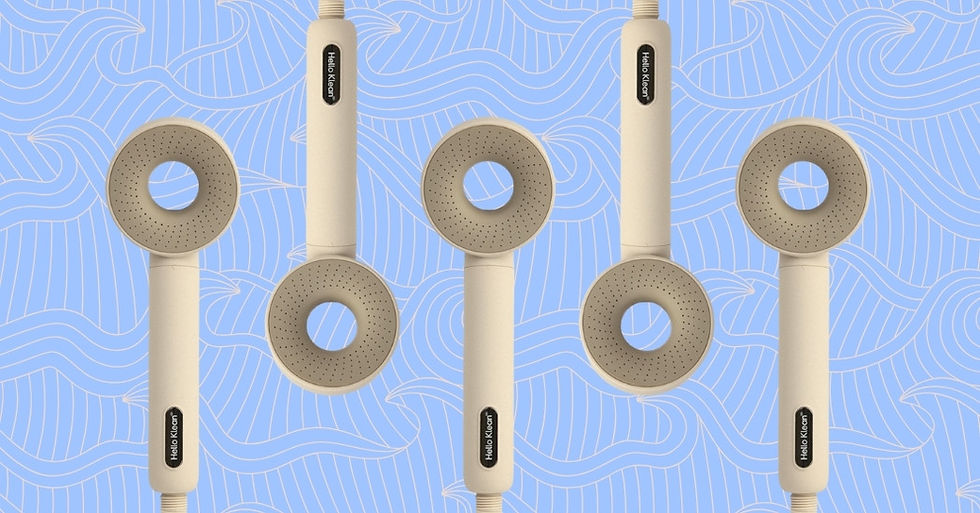
These screw straight onto your existing shower and help reduce chlorine and other impurities that can make hard-water showers feel harsher. They’re an easy way to improve how your hair and skin feel without installing a full water softener.
Keen try one out? See our guide to the best shower filters for hair. For a broader explanation of how these products work, read what to know before buying a shower filter.
2. Try a vinegar rinse
Apple cider vinegar lowers your hair’s pH, removes mineral build-up, and contains hair-healthy vitamins B and C. Mix one part vinegar with two parts water and pour over hair after shampooing. Leave it for a few minutes, then rinse well.
(Just be careful not to get it in your eyes and rinse thoroughly so you don't smell like a chippy!)
3. Use a clarifying shampoo
Clarifying shampoos are made to remove residue — including minerals. Look for ones with ingredients like vitamin C or apple cider vinegar. Just don’t overdo it — once a week is usually enough, followed by a nourishing conditioner or deep treatment.
4. Rinse with filtered water
It might sound bougee, but doing a final rinse with bottled water or water from your Brita jug will help rinse some of the minerals away and make your hair feel nicer.
5. Consider a water softener
If hard water is affecting more than just your hair — think flaky kettles, scaly heating systems, stiff laundry — a full water softener could be worth it. It removes the minerals at the source and can dramatically improve your whole home’s water quality.
6. Speak to your hairdresser
If you’re struggling with dry or dull hair, bring it up with your hairdresser. Many UK salons are clued up on hard water and can clarify your hair in-salon or recommend a more tailored haircare routine.
✨Limescale Lowdown ✨
Hard water can cause dry, dull, frizzy hair and itchy scalps.
It creates build-up that blocks moisture, fades colour faster, and messes with your products.
Apple cider vinegar rinses, clarifying shampoos, and shower filters can all help.
For a full fix, a water softener will remove the minerals at the source.

Author bio: Lucinda Smalley is the founder of Hard Water Home, a UK-based consumer site helping households in hard water areas understand the challenges and solutions more easily — and make smarter choices for their health and homes. Based in Poole, she also co-runs an award-winning plumbing company, giving her first-hand insight into how water quality affects everything from appliances to skin and hair. When she’s not writing, she’s happiest at the beach with her family and a good cup of coffee (minus the floaty bits!). More about us ➡