Best descaler for washing machines and dishwashers (UK comparison)
Updated: Aug 5
Noticed your washing machine starting to smell a bit off? Or your dishes coming out of the dishwasher looking dull instead of properly clean?
In hard water areas this is often a sign of limescale building up inside your appliances.
Please note: This page may contain affiliate links. If you buy through them, I may earn a commission at no extra cost to you. As an Amazon Associate I earn from qualifying purchases. Recommendations are always based on independent research and analysis.
Our top picks


Washing machines and dishwashers are especially affected because they heat water regularly.
Over time, minerals like calcium and magnesium settle on internal parts, reducing cleaning performance, affecting efficiency and sometimes causing unpleasant smells.
Using a descaler for washing machines and dishwashers every couple of months helps remove these deposits and keep everything running properly.
But not all descalers work in the same way — and some are better suited to certain situations than others.
Below, we compare some of the most effective washing machine and dishwasher descalers available in the UK, from ready-made products to a simple, low-cost alternative.
Oust descaler sachets (best overall)

Best for: reliable descaling
Typical price: RRP £3.00
Cost per appliance: £1.50
Oust is one of the most widely used washing machine and dishwasher descalers in the UK. It uses sulphamic acid, which is effective at dissolving limescale without being overly aggressive.
It works well in both washing machines and dishwashers, and the pre-measured sachets make it easy to use.
If you just want something simple that works consistently, this is usually the safest choice.
Ecozone appliance descaler tablets (best eco option)

Best for: regular maintenance and eco-friendly cleaning
Typical price: RRP £4.99
Cost per appliance: 83p
Ecozone tablets use a citric acid-based formula to break down limescale and detergent residue.
They’re not as strong as heavier-duty descalers, but they’re ideal for monthly maintenance, especially if you want something plant-based and plastic-free.
A good option if you’re already keeping on top of limescale and want a gentler approach.
Kilrock Big W descaler (best for heavy limescale)
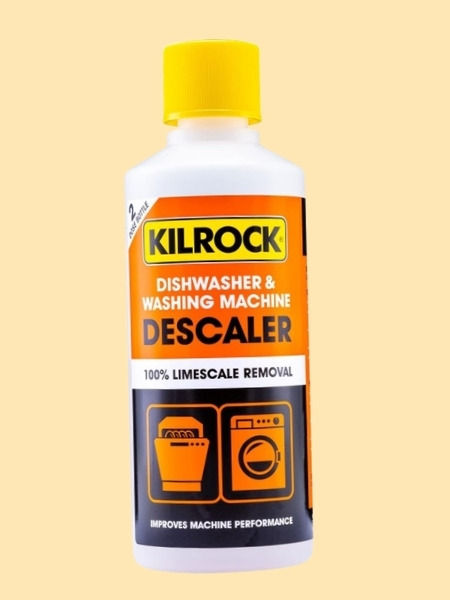
Best for: heavy limescale buildup
Typical price: £6.58
Cost per appliance: £3.29
Kilrock uses phosphoric acid, which is significantly stronger than most household descalers.
If your washing machine or dishwasher hasn’t been descaled in a while, or you’re seeing visible scale and reduced performance, this is one of the most effective options.
From a plumbing perspective, this is closer to what we’d use for more built-up systems — but it’s probably more than you need for routine maintenance.
Citric acid (best budget, natural option)

Best for: budget, natural descaling
Typical price: £5.50 — £8 per 1kg
Cost per appliance: 25p — 35p
Citric acid is one of the simplest ways to remove limescale — and it’s what some commercial descalers are based on.
It’s very effective at dissolving mineral deposits, inexpensive, and the added bonus with this product is that it’s effective on dissolving limescale throughout your home in kettles, toilets, showerheads and more.
While the upfront cost is higher than some options, it’s one of the best value choices long-term — a 1kg bag typically covers around 16–22 descales.
If you’re happy measuring it yourself, it’s easily the cheapest option for a washing machine and dishwasher limescale remover.
Best washing machine descaler comparison: Oust vs Ecozone vs Kilrock vs citric acid
Product | Best for | Type | Heavy limescale? | Price per use |
Oust sachets | Best overall | Sulphamic acid blend | Yes | £1.50 |
Ecozone tablets | Best eco option | Citric acid based | Moderate | 83p |
Kilrock Big W | Heavy limescale | Phosphoric acid | Yes (strong) | £3.29 |
Citric acid powder | Best budget natural | Natural acid | Yes | 25p - 35p |
Which descaler is right for you?
The best descaler for washing machines and dishwashers depends on how much limescale has built up and how you prefer to clean.
Oust is usually the easiest option for most households, especially for regular, reliable descaling.
Ecozone is a good choice for green credentials and ongoing maintenance.
Kilrock is one of the strongest options and works well on stubborn limescale.
Citric acid is hard to beat. It’s simple, effective and often works just as well as branded products.
Whichever option you choose, using a washing machine limescale remover regularly will help improve performance, reduce energy use and extend the life of your appliances.
Why limescale can make your washing machine and dishwasher smell
While smells in washing machines are usually linked to bacteria, detergent residue and trapped moisture, hard water can play a role as well.

As mineral deposits build up inside the machine, they form a rough surface that detergent residue, dirt and bacteria can stick to. Over time, this combination can start to break down and produce that familiar musty or slightly sour smell.
In washing machines, this is often most noticeable around the rubber door seal and inside the drum. In dishwashers, it can affect spray arms and internal pipework, sometimes leading to unpleasant smells when you open the door.
From a practical point of view, it’s rarely just a “dirty machine” issue — it’s usually a mix of limescale + detergent buildup + trapped dirt + moisture.
That’s why in hard water areas, simply running a cleaning cycle doesn’t always solve the problem long-term.
If limescale isn’t removed as well, the underlying buildup can return more quickly, bringing the smell back with it.
Regular descaling helps remove that mineral layer, which makes it much harder for residue and bacteria to build up in the first place.
The most common mistake people make
Most people try to fix a smelly washing machine by running a hot wash or using a cleaner.
That helps temporarily — but if you live in a hard water area and don’t remove limescale, the underlying layer is still there.
It’s a bit like cleaning over a surface without removing what’s underneath.
That’s why the smell comes back.
How to descale a washing machine and dishwasher (quick method)
The exact steps vary slightly depending on the product, but the overall process is straightforward.
For a washing machine, you’ll typically run an empty hot cycle with the descaler added to the drum or drawer. For dishwashers, the descaler is added to an empty machine and run on the hottest cycle.
If using citric acid:
Washing machine: Add 3–4 tablespoons directly into the empty drum, run hot cycle
Dishwasher: Add 3–4 tablespoons directly into the empty washer, run hot cycle
How often should you descale appliances?
In most hard water areas in the UK:
every 1–2 months if your water is very hard
every 2–3 months if it’s moderately hard
From a plumbing point of view, the biggest issues tend to come from machines that haven’t been descaled at all for long periods.
Regular maintenance is far easier (and cheaper) than dealing with heavy buildup later.
How to prevent limescale buildup
Descaling removes existing deposits, but a few small habits can slow things down. Running occasional hot cycles helps rinse away early buildup before it hardens.
Using the correct amount of detergent also reduces residue inside the machine.
You can also use something like the Ecozone Magnoball Anti-Limescale Ball, which sits inside the washing machine drum and helps reduce how quickly scale forms.
It won’t completely stop limescale, but it can help reduce buildup and extend the time between deep cleans.
For a more long-term solution, some households choose to install a water softener. Unlike descalers, which remove limescale after it’s formed, a water softener works by removing calcium and magnesium from the water before they can settle inside your appliances.

This can significantly reduce limescale throughout the home, including in washing machines, dishwashers, kettles and pipework. It’s a bigger upfront investment, but in hard water areas it can mean less cleaning, better appliance efficiency and longer lifespans.
When to use each type of descaler

Author bio: Lucinda Smalley is the founder of Hard Water Home, a UK-based consumer site helping households in hard water areas understand the challenges and solutions more easily — and make smarter choices for their health and homes. Based in Poole, she also co-runs an award-winning plumbing company, giving her first-hand insight into how water quality affects everything from appliances to skin and hair. When she’s not writing, she’s happiest at the beach with her family and a good cup of coffee (minus the floaty bits!). More about us ➡


