How to clean limescale from a shower screen (and keep it clean longer)
I don’t know about you, but cleaning the shower screen is one of those jobs that’s very easy to put off. You get used to the cloudy glass and streaks… until one day you notice it properly and think, right — that needs sorting.
If your shower screen looks dull, streaky or covered in white marks, you’re dealing with one of the most common hard water problems in UK homes.

Jump to
Those marks aren’t just surface dirt. They’re limescale — the residue left behind when water dries on the glass. Over time, it builds up into the kind of hard water stains that make your shower screen look permanently unclean.
The good news is you can clean limescale from a shower screen fairly easily once you use the right method. And with a few small changes, you can keep it looking clear for much longer too.
Quick answer
To clean limescale from a shower screen, apply an acidic solution (like citric acid or vinegar), leave it for 20–30 minutes, then wipe gently, rinse, and dry the glass to avoid streaks.
To keep your shower screen clean for longer, dry it after each use, clean little and often, or consider using a shower filter to help slow limescale buildup.
Why your shower screen looks cloudy or streaky
If you’re constantly dealing with a cloudy shower screen or white marks on your glass, it’s almost always down to hard water.
Water in many parts of the UK contains dissolved minerals like calcium and magnesium. When droplets sit on your shower screen and dry, those minerals are left behind as a residue that gradually builds into limescale.
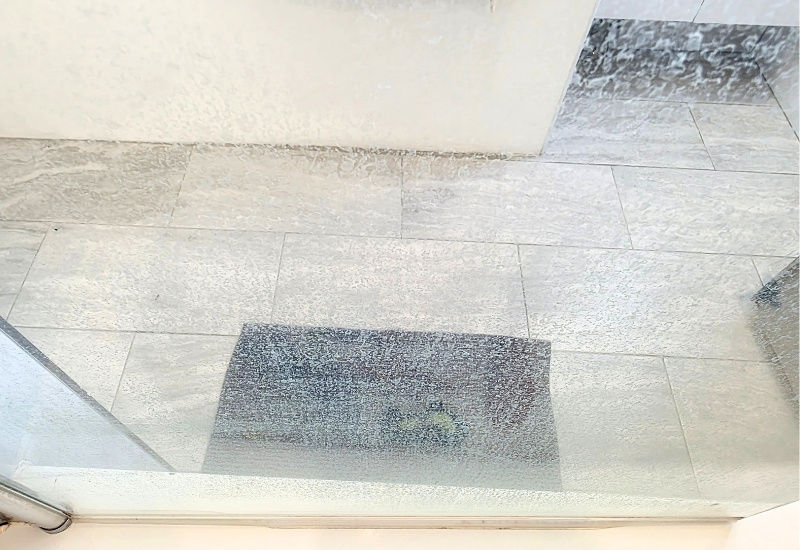
That’s what causes white marks on shower glass, water stains on your shower screen, streaks that don’t seem to wipe away, and that slightly rough or chalky feel on the surface.
It also explains why regular bathroom sprays often feel like they’re not doing much. They clean the surface, but they don’t dissolve the mineral buildup underneath — which is why the problem keeps coming back. To remove it properly, you need something acidic that breaks those deposits down.
The best way to clean a shower screen (step-by-step)
Method 1: Citric acid (best overall)
Make your solution: Fill a bowl or spray bottle with warm water and add 1–2 tablespoons of citric acid, plus a small squirt of washing up liquid (to help tackle soap scum).
Apply to the glass: Spray or use a cloth or sponge to spread the solution across the shower screen. For heavier buildup, soaking kitchen roll and pressing it onto the glass helps keep the area covered.
Leave it to work: Let the solution sit for 20–30 minutes so it can break down the limescale properly.
Wipe and rinse: Gently wipe the surface, then rinse thoroughly with clean water.
Dry the glass: Finish with a microfibre cloth or squeegee to prevent streaks and water marks.
Method 2: White vinegar
Apply vinegar to the glass: Use white vinegar neat or diluted 1:1 with water. Put it in a bottle and spray or soak a cloth and apply.
Leave to sit: Allow it to sit for 20–30 minutes. You can use soaked kitchen roll for better coverage.
Wipe clean: Gently wipe away the limescale — no heavy scrubbing needed.
Rinse thoroughly: Rinse with clean water to remove any residue.
Dry for a clear finish: Use a microfibre cloth or squeegee to avoid streaks.

Method 3: Brand limescale remover (e.g. Bower Collective)
Spray directly onto the glass: Apply the cleaner evenly across the shower screen.
Follow the instructions: Most sprays need just a few minutes to work, so check the label.
Wipe and rinse: Wipe away loosened limescale, then rinse well with water.
Dry the surface: Finish with a cloth or squeegee for a streak-free result.
How to stop limescale on your shower screen (and keep it clean longer)
Removing limescale is only half the job. If nothing else changes, it will come back quickly — especially in hard water areas. This is where a few small habits and upgrades can make a big difference.
Dry your shower screen after showering
The simplest way to prevent limescale on shower glass is to reduce how much water is left sitting on the surface.
Using a squeegee after each shower takes just a few seconds, but it massively cuts down how much residue is left behind. Less water on the glass means fewer minerals drying and forming those white marks.

It’s one of the easiest changes you can make, and probably the most effective.
Clean little and often
It’s much easier to maintain a clean shower screen than to rescue one that’s been left for weeks.
A quick weekly clean with citric acid or vinegar keeps limescale from building up too heavily. It also means you don’t need to scrub or leave products sitting for long periods.
In practice, this is what turns it into an “easy clean shower screen” rather than an ongoing chore.
Use a shower filter
If you want to go a step further, improving your water quality can make a noticeable difference.
Shower filters don’t fully remove hardness minerals, but they can help reduce how visible limescale is and often improve how your water feels on your skin and hair.

If you’re constantly dealing with water stains on your shower screen, this can help slow things down.
Read more Best shower filters for hard water UK
Consider a water softener (long-term fix)
For a full solution, a water softener removes the minerals that cause limescale altogether.
That means no more buildup on your shower screen, taps, or appliances. It’s a bigger investment, but it’s the only option that tackles hard water at the source across your whole home.
Read more Are water softeners worth it?
The best shower screen cleaners and tools
There are plenty of shower screen cleaner sprays available, and they can be useful if you want something quick and convenient.
Products like Bower Collective's Limescale Remover are designed to dissolve limescale quickly and can save time when buildup is more noticeable.
Helpful products


However, a simple homemade solution gives very similar results for less cost over time.
Where you’ll see a bigger difference is in the tools you use. If you’re looking for a simple shower screen cleaner tool, a squeegee is easily the most effective option. It removes water before it dries, which means fewer minerals are left behind.
A microfibre cloth also helps you get that clear, streak-free finish, which makes the glass look noticeably cleaner rather than smeared.
Does vinegar work on shower glass?
If you’re searching for a shower screen cleaner, vinegar is one of the most popular options — and it does work.
White vinegar is acidic enough to dissolve limescale and can make a noticeable difference, particularly on lighter buildup. It’s a simple, low-cost way to clean shower screen glass without needing specialist products.
That said, it’s slightly less powerful than citric acid and can take longer on heavier limescale. The smell is also something to consider.
In most cases, vinegar is a solid everyday option. But if you’re dealing with more stubborn hard water stains on shower glass, citric acid tends to be more effective.
How to keep your shower screen clear (without constant scrubbing)
If your shower screen never quite looks clean, it’s usually not because you’re doing anything wrong. It’s because hard water keeps leaving minerals behind every time you use it.
Using citric acid or vinegar is the best way to clean a shower screen properly, but the real difference comes from what you do afterwards. Drying the glass, staying on top of it, and reducing how much limescale forms in the first place all make it much easier to manage.
Do that, and you’ll spend far less time cleaning — and your shower screen will stay clear for much longer.

Author bio: Lucinda Smalley is the founder of Hard Water Home, a UK-based consumer site helping households in hard water areas understand the challenges and solutions more easily — and make smarter choices for their health and homes. Based in Poole, she also co-runs an award-winning plumbing company, giving her first-hand insight into how water quality affects everything from appliances to skin and hair. When she’s not writing, she’s happiest at the beach with her family and a good cup of coffee (minus the floaty bits!). More about us ➡


