Does reverse osmosis remove limescale? (and what to consider before buying)
Updated: Aug 12
Want the simple answer? Yes — reverse osmosis removes limescale.
But before you buy one, there are a few important things to consider. This guide is for you if you’re fed up with descaling your kettle, considering reverse osmosis, and want to know if it’s actually worth it for you and your home.

Jump to
How reverse osmosis removes limescale
Hard water contains calcium and magnesium. These are the minerals that form limescale when water is heated or evaporates.
Reverse osmosis pushes water through a very fine membrane that removes these dissolved solids. The result is water with very low mineral and contaminant content.
In practical terms, that means your kettle stays clean, your coffee tastes smoother, and you’re not constantly dealing with limescale.
Will you actually notice a difference? (yes — and it lasts)
This is where reverse osmosis really stands out.
Most people notice the difference quickly — kettles stay clean, hot drinks taste better, and appliances like coffee machines need far less descaling.
But more importantly, it lasts. Instead of needing to descale every few weeks or months, many people find they barely have to think about it anymore.
It’s one of the few solutions where the change feels obvious and long term.
What to consider before buying reverse osmosis
Reverse osmosis (RO) can be a great upgrade — but it’s not a one-size-fits-all solution. A few things are worth thinking through before you commit.
What problem are you actually trying to solve?
RO is brilliant for drinking water and stopping limescale in kettles and coffee machines. But it won’t do anything for your shower, pipes or heating system. If those are your main frustrations, a water softener may be a better fit (more on those later).
Under-sink or countertop — which suits your home?
Under-sink systems connect directly to your water supply and give you filtered water on demand from a separate tap.
Countertop systems are becoming more popular, they don’t need plumbing — you fill them manually — but they take up space on your worktop.
Space and setup
Under-sink systems are fairly compact these days (especially tankless designs), but you’ll still need cupboard space for the unit and connections.
If you’re confident with DIY, many systems come with clear instructions. If not, you’ll likely need a plumber, which can add £200+ to the cost.
Countertop systems are plug and play, so no plumbing alterations needed — but you’ll need worktop space and access to a socket.
Ongoing filter costs
Filters need replacing regularly to keep the system working properly. It’s not huge, but it’s an ongoing cost to factor in.
Water waste (important to know)
Reverse osmosis systems produce some wastewater as part of the filtration process. Modern systems are much more efficient than older ones, but it’s still something to be aware of if you’re trying to reduce water use.
It removes healthy minerals
Calcium and magnesium — while responsible for limescale — are also beneficial minerals. You’ll lose that small daily intake with a standard RO system. Some people don’t mind this, while others prefer systems that add minerals back in.
Under-sink tank vs tankless systems
Traditional under-sink RO systems use a storage tank, so you have filtered water ready to go. They take up more cupboard space and can be slower to refill once the tank is empty.
Tankless systems are more compact and filter water on demand, often with faster flow rates. They tend to be easier to fit in modern kitchens, but they do need a power supply.
Best reverse osmosis systems for limescale
We’ve fitted and tested systems like the Waterdrop range at our plumbing company, and we rate them highly — they’re modern, well-built systems that are effective and relatively low maintenance.
Under-sink models
Under-sink systems are the best option if you want something hidden away and more of a “set and forget” solution (aside from filter changes). Once installed, they give you filtered water on demand from a separate tap, without taking up any space on your worktop.
They’re usually the right choice if you’re planning to stay in your home and want something that feels like a permanent upgrade.
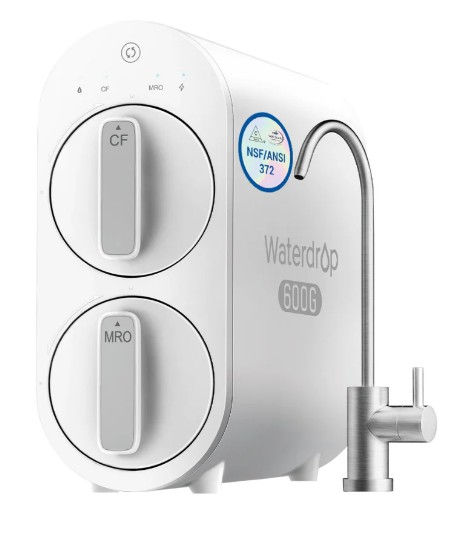
Waterdrop G2P600
Compact, tankless and ideal for most homes
Waterdrop G3P600
Upgraded model with extra filtration and a built-in tap TDS display
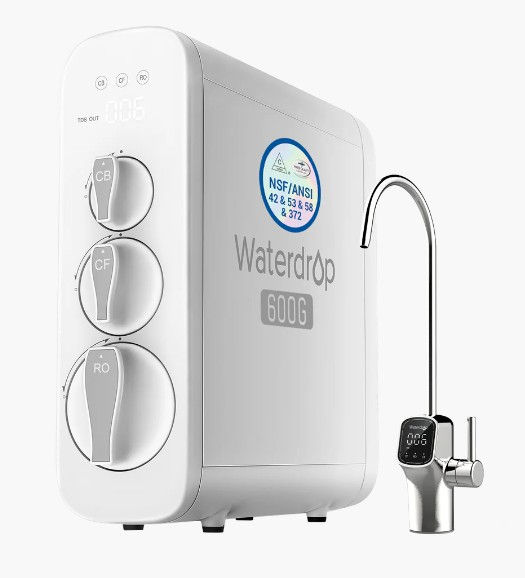
Read more: Considering this RO system? Our detailed G3P600 review covers filtration performance, waste water, installation, customer feedback and whether it's the right choice for hard water homes.
Or if you're looking for a more advanced system with add UV sterilisation Waterdrop's G3P800 is worth considering.
Countertop options
If you don’t want the hassle of installation, a countertop RO system is worth considering. You simply fill it manually, so there’s no plumbing involved.
Many models also give you instant hot filtered water — which means no more kettle and no waiting for it to boil.
They’re a good fit if you’re renting or don’t want to modify your kitchen's plumbing. Another bonus is that they’re portable — so if you move, they can easily come with you.
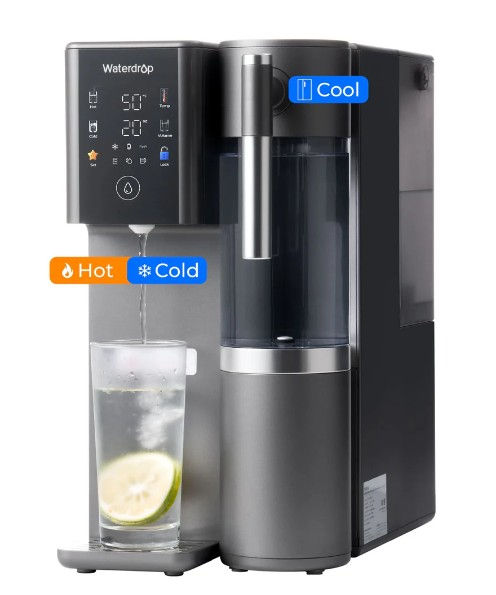
Waterdrop A2
RO filtered water at your desired temperature in seconds for any drink
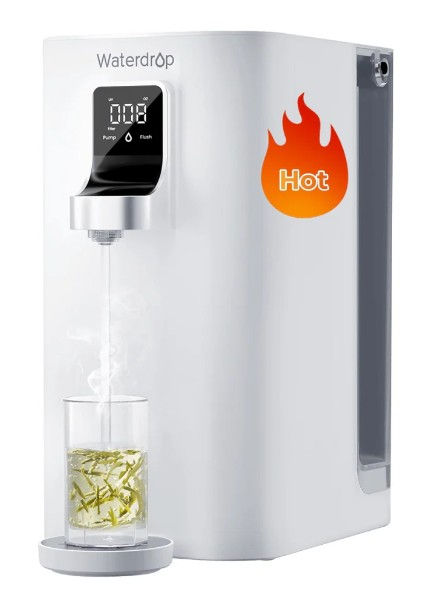
Waterdrop K19
Delivers fresh, filtered RO hot water in 3 seconds
Considering reverse osmosis from this brand? See Waterdrop filter reviews for real-world feedback.
Remineralised water option
If you like the idea of reverse osmosis but don’t want to lose minerals completely, there are systems designed to add them back in.
This can be a good middle ground if you want the benefits of filtration while keeping a more “natural” mineral balance in your drinking water.
Sküma
RO filtered water on demand, hot or room temperature, plus personalised mineral content
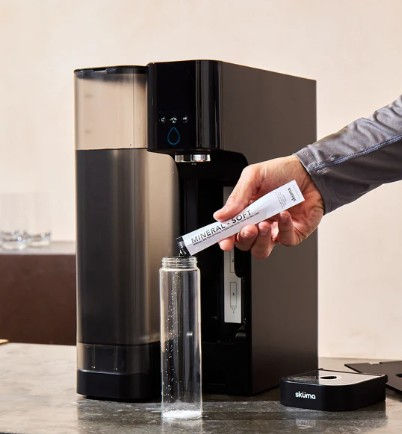
Interested in Skuma? Read our Skuma water review and get £20 off with our Skuma discount code↗
Is reverse osmosis worth it for limescale?
Yes — if your main frustration is things like descaling your kettle or protecting a coffee machine, it’s one of the most effective solutions you can get.
But it’s not ideal if you’re looking for a whole-home fix. It won’t reduce limescale in your shower, pipes or heating system — so you will still find yourself dealing with those issues elsewhere.
Compare some of the best under-sink and countertop reverse osmosis systems in the UK.
Alternative filters to reverse osmosis
If you like the idea of reducing limescale but don’t want the price, involved setup or waste water of reverse osmosis, there are other options.
These don’t remove the minerals — instead, they change how those minerals behave. In simple terms, they’re less likely to stick to surfaces.
Two popular options are FlowPure on-tap filter and Maverick Mav 02, an under-sink option.
They’re easier to install and cheaper upfront. While they don’t give the same “scale-free” result as RO, they can slow down how quickly limescale builds and make cleaning easier.
Find out more about the best on-tap filters and best under-sink filters in the UK.
Not sure you actually need RO? Our Taap takes a different approach, retaining calcium and magnesium while giving you filtered hot and chilled water straight from the mains.
Want to filter your shower water too?
If you’re thinking about filtering your tap water, it’s worth considering where hard water affects you most.
Your shower uses the same water supply, and this is where many people notice things like dry skin, frizzy hair, or irritation after washing.
Shower filters don’t remove limescale in the same way, but they can improve how the water feels on your skin and hair — often making it more comfortable day to day.
Read more Best shower filters for hard water UK
Is a water softener right for you?
If you’re looking at reverse osmosis and shower filters together, it’s worth stepping back and looking at the bigger picture.
You’ll have upfront costs and ongoing filter changes, but you still won’t be tackling limescale in your pipes, boiler or heating system.
Water softeners are usually a better long-term option if you’re staying in your home, have multiple bathrooms, or want to properly deal with limescale throughout the house — especially if it’s affecting appliances, skin or hair.
Read more Are water softeners worth it?

Author bio: Lucinda Smalley is the founder of Hard Water Home, a UK-based consumer site helping households in hard water areas understand the challenges and solutions more easily — and make smarter choices for their health and homes. Based in Poole, she also co-runs an award-winning plumbing company, giving her first-hand insight into how water quality affects everything from appliances to skin and hair. When she’s not writing, she’s happiest at the beach with her family and a good cup of coffee (minus the floaty bits!). More about us ➡


